分类 Peptide Synthesis 下的文章
PEGylation Of Calcitonin
Calcitonin (CT) is a 32 peptide hormone secreted by parafollicular cells (C cells) in the thyroid gland. It was first discovered and demonstrated by Hirsh to regulate calcium phosphorus metabolism. At present, calcitonin has shown good efficacy in the treatment of osteoporosis, Paget's disease, hypercalcemia, hyperparathyroidism, osteoarthritis, and bone healing. However, during the use of calcitonin, it has also been found that the drug has common drawbacks as protein and peptide drugs, such as immunogenicity and short half-life. There have been clinical reports that calcitonin can cause allergic reactions. In addition, due to the half-life of calcitonin in the human body being 70-90 minutes and its rapid metabolism, it needs to be administered daily or every other day, which also brings difficulties and pain to patients in treatment.
In this study, a polyethylene glycol-modified calcitonin was provided, characterized by a long chain of polyethylene glycol derivatives attached to the amino group of calcitonin by covalent bonds, and the group directly linked to the amino group of calcitonin was methylene or carbonyl. Using salmon calcitonin, the amino acid composition sequence of salmon calcitonin is:
H-Cys-Ser-Asn-Leu-Ser-Thr-Cys-Val-Leu-Gly-【Lys】-Leu-Ser-Gln-Glu-Leu-His-【Lys】-Leu-Gln-Thr-Tyr-Pro-Arg-Thr-Asn-Thr-Gly-Ser-Gly-Thr-【Pro】-NH2( Two Cys can form disulfide bonds; The molecular formula is C145H240N44O48S2; The molecular weight is 3432.
Example 1 mPEG-SPA-5000 modifies the synthesis of salmon calcitonin
Selection of reaction temperature:
Take 2ml of 1.0mg/ml salmon calcitonin solution, add 2ml of phosphate buffer solution to make the pH value of the solution 7.0, then add 15mg of mPEG-SPA-5000 solid, dissolve, mix well, take 0.8ml each and place it in 4 stoppered test tubes, and then place them at 4 ℃, 10 ℃, 25 ℃, and 37 ℃ for 30 minutes. Add 5mg of glycine to terminate the reaction. Compare the modification rate of single polyethylene glycol modified salmon calcitonin (a salmon calcitonin molecule with one polyethylene glycol chain attached, hereinafter referred to as polyethylene glycol modified salmon calcitonin) and determine the modification conditions.
The results showed that polyethylene glycol-modified salmon calcitonin could be obtained at these temperatures, and the modification rate was the highest at 25°C.
Selection of reaction time:
Take 2ml of 1.0mg/ml salmon calcitonin solution, add 2ml of phosphate buffer to make the pH value of the solution 7.0, then add 15mg of mPEG-SPA-5000 solid, dissolve, mix well, take 0.7ml of each and put it in 4 corked test tubes, and then react at 25°C for 5, 15, 30, 60 and 120 min, then add 5mg glycine to stop the reaction. Compare the modification rate and determine the modification conditions.
The results showed that pegylated salmon calcitonin could be obtained under these conditions, and the modification rate did not increase significantly after 30 minutes.
Molar ratio of mPEG-SPA-5000 to salmon calcitonin:
Take 8ml of 1.0mg/ml salmon calcitonin solution, add 8ml of phosphate buffer to make the pH value of the solution 7.0, take 3.0ml of each and put it in 5 corked test tubes, and then add 2.2, 4.4, 6.6, 11.0 and 22.0mg mPEG-SPA-5000 (equivalent to the molar ratio of salmon calcitonin and mPEG-SPA-5000 is 1∶1, 1∶2, 1∶3, 1∶5, 1∶10, respectively), dissolve, mix, and mix. The reaction is terminated after 30 minutes. Compare the modification rate and determine the modification conditions. The results showed that the polyethylene glycol-modified salmon calcitonin could be obtained under these conditions, and the modification rate reached the highest when the molar ratio of mPEG-SPA-5000 and salmon calcitonin was 3.
Example 2 Isolation, purification and identification of polyethylene glycol-modified salmon calcitonin
Take 1.0mg/ml of salmon calcitonin solution, add 10ml of phosphate buffer to make the pH value of the solution 7.0, then add 44mg of mPEG-SPA-5000 solid, dissolve, mix well, react at 25°C for 30min, and add 25mg glycine to stop the reaction. The above reaction solution was taken and replaced with an ultrafiltration membrane with an intercepted molecular weight of 1000, and the acetate-sodium acetate buffer with a pH of 4.0 was replaced and concentrated to 5ml, and separated on the column. The chromatographic conditions are as follows:
Chromatography medium: SOURCE30S
Column volume: 5ml
Flow rate: 3.0ml/m
in Column equilibration: Equilibrate 5 times the column volume with 0.01mol/L, pH 4.0 sodium acetate (starting buffer)
Loading volume: 5ml
Elution: The unadsorbed part is eluted with a starting buffer of 3 times the column volume, and then a gradient is used to elute the starting buffer, 1.0mol/LNaCl buffer, and the percentage of 1.0mol/LNaCl buffer volume is from 0~100%, and the column volume is eluted 20 times the column volume. Collection: 3.0ml/tube was followed up with RP-HPLC, combined with polyethylene glycol-modified salmon calcitonin, and purified by reversed-phase column chromatography. The chromatographic conditions for reversed-phase column chromatography are as follows: Chromatography medium: Reversed-phase silica gel (C18, 40 μm)
Column volume: 10ml
Flow rate: 3.0ml/m
in Column equilibration: 10 times the column volume equilibrated with 0.5%
acetic acid solution: 10ml
Elution: The unadsorbed part is eluted with 0.5% acetic acid solution with 5 times the column volume, and then the gradient solution is composed of 0.5% acetic acid solution and 0.5% acetate ethanol solution, and 0.5% acetate ethanol solution is used to elute 30 times the column volume. Collection: 3.0ml/tube was followed up with RP-HPLC and combined with pegylated salmon calcitonin.
RP-HPLC analysis showed that the purity of the obtained polyethylene glycol-modified salmon calcitonin was more than 98%, as shown in Figure 1, which had a high purity.
The molecular weight of polyethylene glycol-modified salmon calcitonin was measured to be 8187.31 by MALDI-TOF-MS, as shown in Figure 2.
The molecular weight of salmon calcitonin is 3432, the molecular weight difference between the two is about 5000, and there is a series of peaks near 8187.31 (M+1 peak), which has the typical structural characteristics of polyethylene glycol, which confirms that the polyethylene glycol-modified salmon calcitonin obtained in embodiment 2 is a single modification product.
Example 3 Comparison of salmon calcitonin and polyethylene glycol-modified salmon calcitonin (prepared by the method of embodiment 2) to reduce blood calcimon in rats
Referring to the potency determination method of calcitonin in Appendix XIIO of Part II of the Chinese Pharmacopoeia in 2005, 90 Wistar female rats weighing 200±15g were selected and fasted for 16 hours before the test, freely drank distilled water, and were randomly divided into 3 groups, with 30 blank, salmon calcitonin and polyethylene glycol-modified salmon calcitonin groups. The dose of salmon calcitonin and pegylated glycol-modified salmon calcitonin was 0.05 μg/kg (calculated by the amount of salmon calcitonin in pegylated glycol-modified salmon calcitonin), and the volume was 0.4 ml/100 g. Before administration and 1, 2, 4, 8, and 12 hours after administration, 5 animals were taken from each group, blood was collected from the ocular venous plexus, and the blood calcium value in the samples was determined by o-cresol phthalein complex. The average blood calcium value of the blank group at each time point is subtracted from the average blood calcium value of the administration group, and the difference between the two is used to compare the average blood calcium value of the blank group with the average blood calcium value of the upper blank group, that is, the blood calcium level can be reduced. The results showed that the polyethylene glycol-modified salmon calcitonin not only did not decrease, but also increased significantly, and the level of blood calcium reduced by 1 times at the same dose was also significantly extended, from 4 hours to 8 hours before modification.
Example 4 Study of the immunogenicity of polyethylene glycol-modified salmon calcitonin (prepared by the method of embodiment 2) on experimental animals
Rabbits were used as experimental animals to prepare antiserum, and formaldehyde-treated salmon calcitonin and polyethylene glycol-modified salmon calcitonin were used as antigens, at a dose of 0.5mg/kg/time, once a week, for a total of 5 times. Salmon calcitonin and pegylated salmon calcitonin were used as antigens, and their respective antiserum titers were determined by two-way immunodiffusion assay, and the results showed that the antiserum titers of salmon calcitonin group were 1∶32. The antiserum titer of the salmon calcitonin group modified by polyethylene glycol could not be measured. Salmon calcitonin and polyethylene glycol-modified salmon calcitonin were used as antigens, and then the antiserum of the salmon calcitonin group was used as the primary antibody, and then horseradish peroxidase (HRP)-labeled sheep anti-rabbit IgG was used as the secondary antibody, and their respective immunogenicity was determined by enzyme-linked immunosorbent assay (ELISA), and the results were as follows: salmon calcitonin group was positive, and pegylated salmon calcitonin group was negative. The above results show that compared with salmon calcitonin, the immunogenicity of pegylated salmon calcitonin modified by polyethylene glycol is significantly reduced, which is more conducive to its use as a therapeutic drug.
Example 5 mPEG-SPA-2000, mPEG-SPA-10000, mPEG-SPA-20000, mPEG-SPA-30000 mPEG-SPA-60000 replace mPEG-SPA-50000 in embodiment 1, and use the methods of embodiments 1 and 2 to obtain polyethylene glycol-modified salmon calcitonin, and perform experiments such as embodiments 3 and 4 to obtain similar results.
Example 6 mPEG-SBA-2000, mPEG-SBA-5000, mPEG-SBA-10000, mPEG-SBA-20000, mPEG-SBA-30000 or mPEG-SBA-60000 instead of mPEG-SPA-5000 in embodiment 1, using the methods of embodiments 1 and 2 to obtain polyethylene glycol-modified salmon calcitonin, and conducting experiments such as embodiments 3 and 4 to obtain similar results.
Example 7 Selection of reaction temperature of salmon calcitonin modified with methoxy polyethylene glycol propionaldehyde 5000 (mPEG-ALD-5000): take 2ml of 1.0mg/ml salmon calcitonin solution, add 2ml of phosphate buffer to make the pH value of the solution 5.0, then add 30mg of mPEG-ALD-5000 solid, dissolve, mix well, and then add 0.029ml of 1mol/L sodium cyanobohydride, Take 0.8ml of each and place it in 4 plugged test tubes, then put it at 4°C, 25°C, 37°C and 50°C for 16h, and then add 5mg glycine to stop the reaction. Compare the modification rate and determine the modification conditions. The results showed that polyethylene glycol-modified salmon calcitonin could be obtained at these temperatures, and the modification rate was the highest at 37°C.
Selection of reaction time: take 2ml of 1.0mg/ml salmon calcitonin solution, add 2ml of phosphate buffer to make the pH value of the solution 5.0, then add 30mg of mPEG-ALD-5000 solid, dissolve, mix well, add 0.029ml of 1mol/L sodium cyanoboron hydride, take 0.7ml of each and put it in 5 corked test tubes, and then react at 37°C for 0.5, 1.0, 8.0, 16.0, 24.0h, and then add 5mg glycine to terminate the reaction. Compare the modification rate and determine the modification conditions. The results showed that salmon calcitonin modified by polyethylene glycol could be obtained under these conditions, and the modification rate did not increase significantly after 16 hours.
Selection of molar ratio of mPEG-ALD-5000 to salmon calcitonin: take 8ml of 1.0mg/ml salmon calcitonin solution, add 8ml of phosphate buffer to make the pH value of the solution 5.0, take 3ml of each and put it in 5 corked test tubes, and then add 2.2, 6.6, 11.0, 22.0 and 33.0mg of mPEG-ALD-5000 (equivalent to the molar ratio of calcitonin to mPEG-ALD-5000 in 1∶1~1∶15), Dissolve, mix well, then add 0.022ml of 1mol/L sodium cyanobohydride for 16.0h, and then add 5mg glycine to stop the reaction. Compare the modification rate and determine the modification conditions. The results showed that the modification rate of salmon calcitonin modified with pegylated glycol was the highest when the molar ratio of mPEG-ALD-5000 to calcitonin was 10, and the modification rate of mPEG-ALD-5000 was not significantly increased.
Example 8 Separation, purification and identification of polyethylene glycol modified salmon calcitonin (aldehyde modification) Take 10ml of salmon calcitonin solution at 1.0mg/ml, add 10ml of phosphate buffer to make the pH value of the solution 5.0, then add 150mg of mPEG-ALD-5000 solid, dissolve, mix well, add 0.145ml of 1mol/L sodium cyanoborohydride, react at 37°C for 16h, and then add 50mg of glycine solid to stop the reaction. Then, according to the method in embodiment 2, the separation, purification and identification of polyethylene glycol-modified calcitonin are carried out. RP-HPLC analysis showed that the purity of the obtained polyethylene glycol-modified salmon calcitonin was more than 98%, which was relatively high. MALDI-TOF-MS analysis showed that its molecular weight was 8124.21, which was a monomodified polyethylene glycol-modified salmon calcitonin.
Example 9 Study on the characteristics of polyethylene glycol modified salmon calcitonin (aldehyde modification) The test and immunogenicity study of mPEG-ALD-5000 modified salmon calcitonin to reduce blood calcimon in rats were carried out according to the method in embodiment 3~4, and the results not only did not decrease the titer, but also significantly increased, the action time was significantly prolonged, and the immunogenicity was reduced.
Example 10 replacing mPEG-ALD-5000 in embodiment 7 with mPEG-ALD-2000, mPEG-ALD-10000, mPEG-ALD-20000, mPEG-ALD-30000 or mPEG-ALD-60000, using the methods of embodiments 7 and 8 to obtain polyethylene glycol-modified salmon calcitonin, and conducting experiments as in embodiment 9 to obtain similar results.
Example 11 mPEG-bALD-2000, mPEG-bALD-5000, mPEG-bALD-10000, mPEG-bALD-20000, mPEG-bALD-30000 or methoxy polyethylene glycol butyraldehyde 60000 (mPEG-ButyrALD-60000) are used instead of mPEG-ALD-5000 in embodiment 7, and polyethylene glycol modified salmon calcitonin is obtained by the methods of embodiments 7 and 8 , and conduct experiments such as the embodiment 9 to obtain similar results.
We are a professional researcher and manufacturer of pharmaceutical polymer materials, providing gram, kilogram, tonnGMP and GMP pharmaceutical PEG, PLA, PLGA, and provide complete quality research reports. We are committed to escorting the development of your medical devices and welcoming more patients.
Email address: haoran.tse@gmail.com
Tel: +8618575536586
An Approach To Prepare Melanotan I
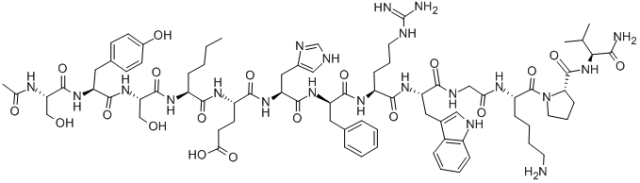
Melanotan I, also known as Afamelanotide, is a linear polypeptide composed of 13 amino acids that is bound to play a greater role in drug research. The main English names of melanotan I are Melanotan-1 and Afamelanotide, as an artificial synthetic analogue of α-melanotropin (α-MSH), melanotan I can be used to treat photosensitive diseases caused by erythropoietic protoporphyria, and most melanotan I products are only labeled for scientific research and are not used in the human body for the time being. In traditional solid-phase synthesis, the choice of resin will have a great impact on the coupling rate and final purity of the product.
Basic information
Chinese name: melanotan I
English name: Melanotan-1
CAS Number: 75921-69-6
Sequence: Ac-SYS{Nle}EH{D-Phe}RWGKPV-NH2
Formula: C78H111N21O19
Molecular weight: 1646.88
Preparation Approach
- Preparation of Fmoc-Val-amino resin
Step 1: Weigh 11.11g (5mmol) of Ramage Amide AM resin resin with a substitution of 0.45mmol/g and add it to the solid-phase reactor, add DCM swelling resin for 30 minutes, drain it, wash it three times with DMF, add a volume ratio of 20% hexahydropyridine DMF solution, react for 5 minutes, add 20% hexahydropyridine DMF solution to react for 10 minutes, wash the DMF in the middle once, and drain it at the end of the reaction. DMF wash 3 times.
Step 2: Dissolve 5.09g of Fmoc-Val-OH, 2.02g of HOBT (1-hydroxybenzotriazole), and 2.32ml of DIC (N,N'-diisopropylcarbodiimide) in DMF at 0°C, and add it to the reaction column for room temperature reaction for 1 hour after complete dissolution.
- Preparation of melanotan I fully protective resin peptideS
tep 1: Add 20% hexahydropyridine DMF solution to the above Fmoc-Val-amino resin, react for 5 minutes, add 20% hexahydropyridine DMF solution again for 10 minutes, wash the middle DMF once, drain it at the end of the reaction, and wash the DMF 3 times.
Step 2: 5.06g of Fmoc-Pro-OH, 2.02g of HOBT (1-hydroxybenzotriazole), and 2.32ml of DIC (N,N'-diisopropylcarbodiaimide) will be dissolved in DMF at 0°C, and after complete dissolution, add to the reaction column for room temperature reaction for 1 hour.
Step 3: According to the method of step 2, according to the sequence of melanotane I, conjugate each amino acid in turn, react to Ac-Ser(tBu)-OH After completion, DMF washes three times, DCM washes three times, methanol washes three times, and drains 23.89g of melanotane I full protection resin peptide. - Preparation of melanotan I crude peptide
Put 23.89g of melanotan I fully protective resin peptide into a round-bottom flask, slowly add 250ml of the configured lysate at 0°C (the volume ratio of the reagent formula used in the lysate is TFA: benzosulfide: phenol: triisopropylsilane: water = 82.5:7.5:5:3:2) and stir slowly, Reaction at low temperature for 0.5 hours, reaction at room temperature for 2 hours, filter to obtain lysate, slowly add the lysate to 2L of anhydrous ice ether and stir, filter and separate crude peptides, wash the ice ether 3 times, and obtain 8.55g of melanotan I crude peptides.
- Preparation of melanotan I high-quality peptidesS
tep 1: Dissolve the crude peptide of melanotan I in 100ml of purified water and filter it with a 0.45μm filter membrane to obtain a crude peptide solution.
Step2. Purification of melanotan I crude peptide using high performance liquid chromatography instrument: Through the DAC-HB50 dynamic axial compression column, mobile phase A is an aqueous solution of 0.05% trifluoroacetic acid and B is a solution of 0.05% acetonitrile trifluoroacetate with a mass concentration of 0.05%, and the peptide solution of the target peak is collected by gradient elution.
Step 3: After high-performance liquid phase purification, 180ml of melanotane I trifluoroacetic acid liquid with a purity greater than 99% is obtained, and 50ml of liquid is obtained after spin steaming and concentration.
Step 4: The column was equilibrated with deionized water and loaded, the sample volume was 50ml, the purity was greater than 99% melanotane I trifluoroacetic acid liquid, eluted in 2% acetic acid aqueous solution system for 50min, the collected target product was rotated and concentrated to 80ml, pre-lyophilized and lyophilized, and finally 5.33g of melanotan I fine peptide was obtained, with a yield of 32.33%.
Preparation Method Of Cagrilintide
Background technology
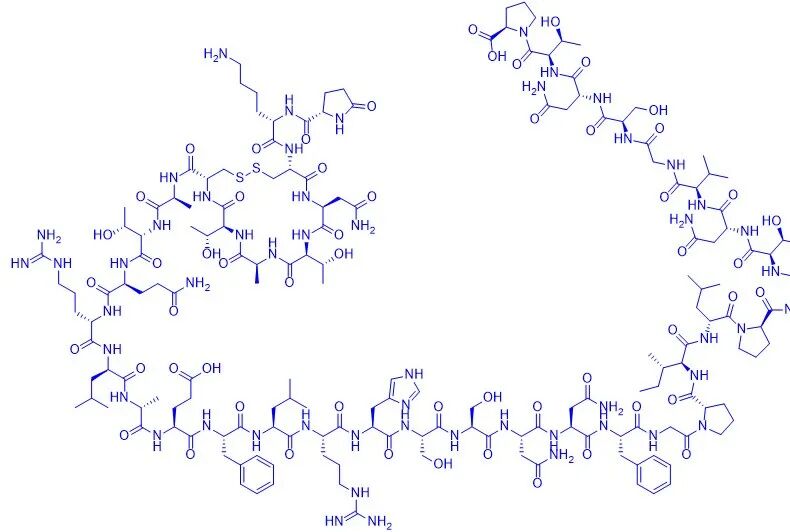
Cagrilintide is a novel long-acting acylated amylin analogue that acts as a non-selective amylin receptor (AMYR) and calcitonin G protein-coupled receptor (CTR) agonist, which is a cyclic polypeptide composed of 38 amino acids with 38 amino acids in a sequence and a pair of disulfide bonds. Cagliptide can significantly reduce body weight and reduce food intake, which has potential in obesity research. Amylin is another hormone associated with hunger and satiety in addition to the GLP-1 signaling pathway.
Cagliptide can reduce energy intake, regulate food choices and preferences, and co-secrete with insulin to regulate glucose, inhibit postprandial glucagon release, and delay gastric emptying. It has obvious advantages in the treatment of diabetes, obesity, metabolic syndrome and cardiovascular disease, and has a wide range of application prospects.
Basic information
Chinese name: 卡格列肽
English name: Cagrilintide
CAS Number: 1415456-99-3
Sequence: γ-glu-lys-cys-asn-thr-ala-thr-cys-ala-thr-gln-arg-leu-ala-glu-phe-leu-arg-his-ser-ser-asn-asn-phe-gly-ile-leu-pro-thr-asn-val-gly-ser-asn-thr-pro-NH2 ( Disulfidebridge:cys4-cys9)
Formula: C194H312N54O59S2
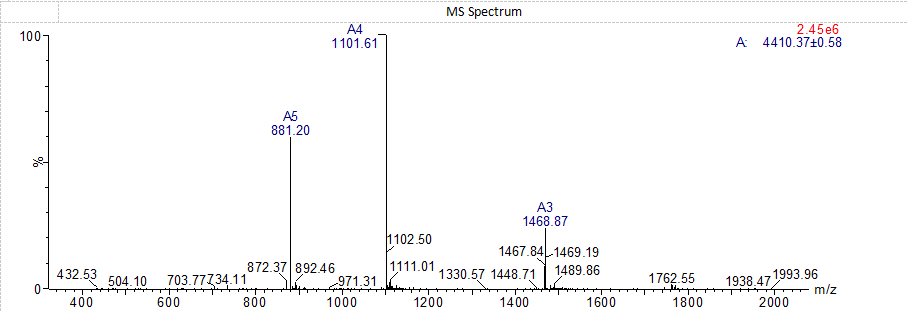
Molecular Weight: 4409.01
Raw materials for Cagrilintide
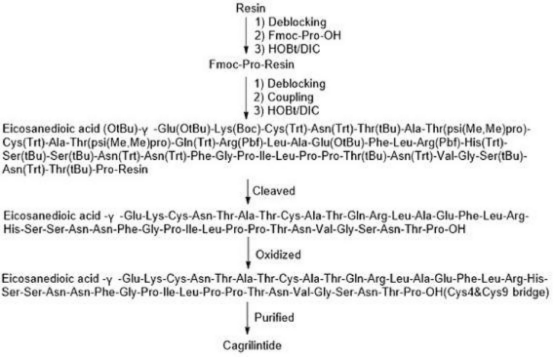
According to the relevant patents of cagrilintide, a synthesis method of cagrilintide can be obtained. The 7th-8th amino acids of the cagrilintide sequence were selected as the pseudoprodipeptide Fmoc-Ala-Thr(pro-me-me)-OH, the 10th-11th amino acids of the sequence were used as the pseudopredipeptide Fmoc-Ala-Thr(pro-me-me)-OH, and the 21st-22nd amino acids of the sequence were used as the pseudoprodipeptide Fmoc-Ser-Ser(pro-me-me)-OH. The remaining sites were coupling according to the amino acid sequence. The peptide resin was lysed to obtain canagliptide linear peptide. Then the crude product of canagliptide was obtained by liquid phase cyclization, and the canagliptide refined peptide was obtained by purification, salting, concentration and lyophilization. This method uses three pseudo-codipeptides for coupling, which solves the problem of increasing the difficulty of coupling due to resin condensation, but increases the production cost, and the purity of the refined peptides prepared by this process is low, which does not meet the quality requirements of the API.
The flowchart is as below.
(1) Preparation of canaglitide peptide resin
Take 1.5mmol of the first protective amino acid and 1.5mmol HOBT, dissolve it with an appropriate amount of DMF and cool to 0~15°C; Another 1.5mmol DIC is taken, slowly added to the DMF solution of the protective amino acid after stirring, and stirred for 10 minutes in an environment of 0~15°C to obtain the activated protective amino acid solution, set aside.
Take 0.5 mmol of amino resin (substitution degree 0.42 mmol/g), swell with DMF solution for 60 minutes, use 20% Pip/DMF solution to protect for 30 minutes, wash and filter to obtain the resin to be reacted.
The first protective amino acid solution after activation is added to the resin to be reacted, and the coupling reaction is carried out at 25~35°C for 120~300 minutes, filtered and washed, and a resin containing 1 protective amino acid is obtained: Fmoc-Pro-Resin.
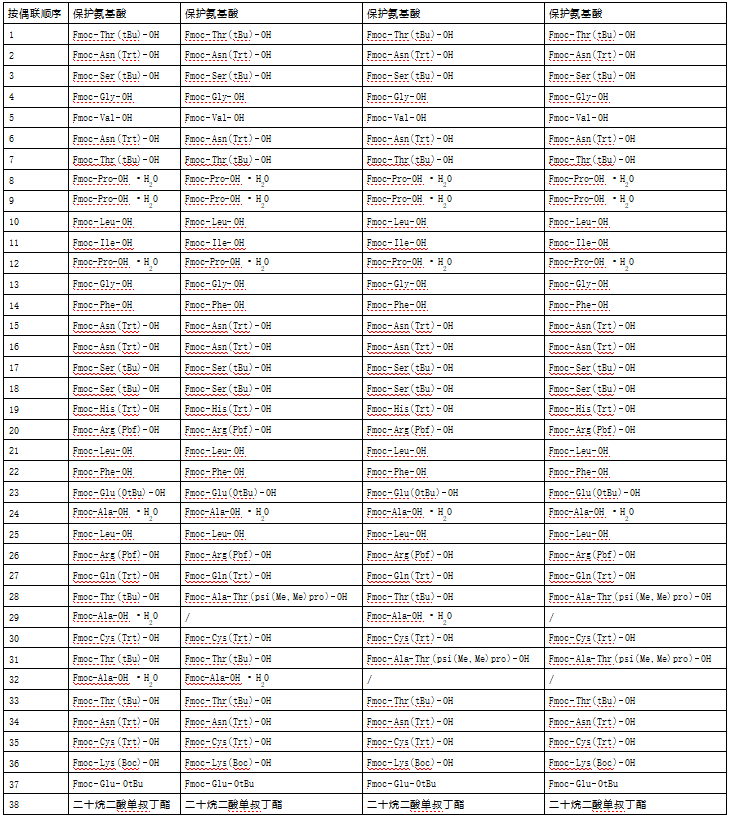
The same method was used to access the 2~38th protective amino acids or fragments corresponding to the above: Fmoc-Thr(tBu)-OH, Fmoc-Asn(Trt)-OH, Fmoc-Ser(tBu)-OH, Fmoc-Gly-OH, Fmoc-Val-OH, Fmoc-Asn(Trt)-OH, Fmoc-Thr(tBu)-OH, Fmoc-Pro-OH· H2O,Fmoc-Pro-OH· H2O,Fmoc-Leu-OH,Fmoc-Ile-OH,Fmoc-Pro-OH· H2O,Fmoc-Phe-OH,Fmoc-Asn(Trt)-OH,Fmoc-Asn(Trt)-OH,Fmoc-Ser(tBu)-OH,Fmoc-Ser(tBu)-OH,Fmoc-His(Trt)-OH,Fmoc-Arg(Pbf)-OH,Fmoc-Leu-OH,Fmoc-Pro-OH· H2O,Fmoc-Glu(OtBu)-OH,Fmoc-Ala-OH· H2O,Fmoc-Leu-OH,Fmoc-Arg(Pbf)-OH,Fmoc-Gln(Trt)-OH,Fmoc-Ala-Thr(psi(Me,Me)pro)-OH,Fmoc-Cys(Trt)-OH,Fmoc-Ala-Thr(psi(Me,Me)pro)-OH,Fmoc-Thr(tBu)-OH,Fmoc-Asn(Trt)-OH, Fmoc-Cys(Trt)-OH, Fmoc-Lys(Boc)-OH, Fmoc-Glu-OtBu, mono-tert-butyl eicosanedioate, and decanaglitide peptide peptide resin 4.98g.
(2) Preparation of Cagrilintide linear peptide crude peptide
Take 4.49g of canagliptide peptide resin and add TFA mixed solution, the ratio of the mixed solution is TFA:EDT/Tis/phenol/H2O=87.5:2.5:5:5:2.5:2.5, and the dosage is 8ml/gram of resin. Stirring reaction at 20~30°C for 3 hours, the reaction mixture is filtered with a sand core funnel, the filtrate is collected, the resin is washed 3 times with a small amount of TFA, the filtrate is combined and then added to the MTBE precipitate, and then washed and precipitated with MTBE 3 times, and the white powder is 2.08g of canaglitide linear peptide crude peptide.
(3) Preparation of cagrilintide cyclic peptide crude peptide solution
0.50g of canagliptide linear peptide crude peptide was configured into linear peptide crude peptide solution at a concentration of 5.0mg/ml, and 5ml of DMSO solution was added drop under the stirred state, and the reaction was 20~30°C for 20h to obtain canaglitide cyclic peptide crude peptide solution.
(4) Preparation of cagrilintide spermatide
The crude peptide solution of cagrilintide cyclic peptide was taken and filtered with a 0.45μm mixed microporous filter membrane.
High performance liquid chromatography was used for purification and preparation, and canagliptide fractions were collected.
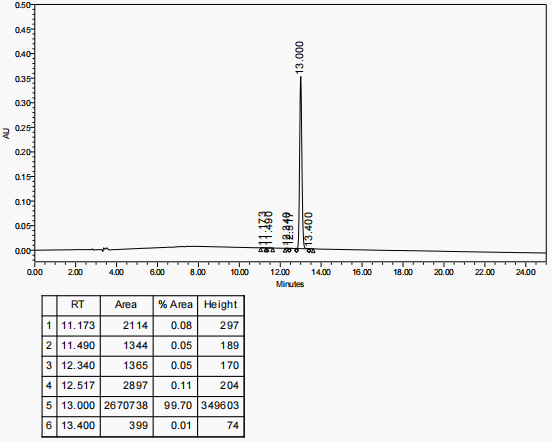
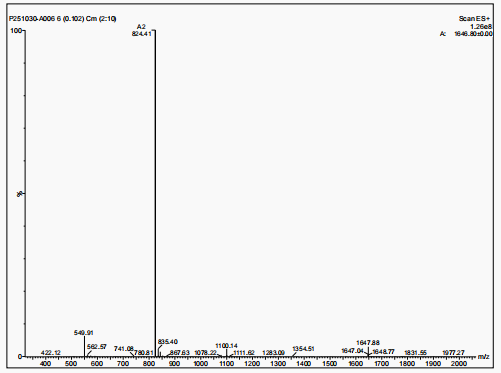
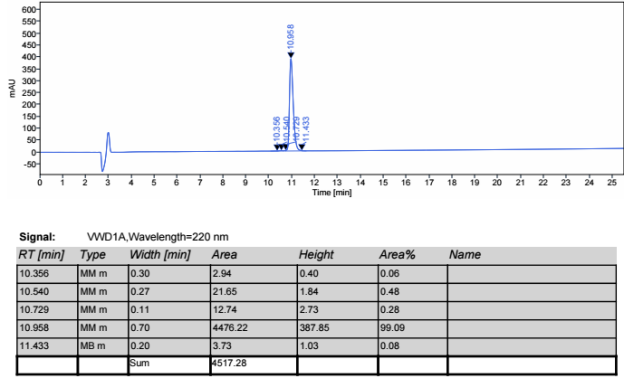
High performance liquid chromatography was used to change the salt, the main peak of the salt exchange was collected and the purity was detected by analyzing the liquid phase, and the solution of the main peak of the salt exchange was combined with the solution of the main peak of salt exchange, and the aqueous solution of canagliptide acetate was obtained by freeze-drying, and the purity was 99.58%, the maximum single impurity was 0.09%, the total yield was 31.87%, and the molecular weight was 4409.0.

The above embodiment shows that compared with the step-by-step coupled synthesis process, the purity of the product obtained by the method provided by the present invention is greater than 99.0%, and the single impurity is less than 0.1%, which improves the product quality and total yield, the process is simple and easy to control, the degree of industrialization is high, and it has a wide range of practical value and application prospects.
Research Progress About Amino Acid Protection In Solid-Phase Peptide Synthesis
Abstract: This paper introduces the preparation and application progress of protective amino acids ——— raw materials for peptide solid-phase synthesis reaction, discusses in detail the α-amino group, α-hydroxyl group and various new protective groups of side-chain active groups of amino acids, summarizes the structural characteristics and application conditions of new protective amino acids, and looks forward to the future development direction of protective amino acids.
Key words: Solid-phase peptide synthesis amino acid protection
In 1962, Merrifield founded the solid-phase peptide synthesis method [1], and since then, solid-phase synthesis using protective amino acids as raw materials has attracted attention for its unique advantages. In the following 10 years, the solid-phase synthesis of peptides has been continuously improved, from small-scale and short peptide chain synthesis to large-scale and long peptide chain synthesis. The anti-AIDS drug T-20, launched in 2003, is a small peptide drug composed of 36 amino acid residues that are fully synthesized. In the 90s of the last century, after the combination of combinatorial chemistry and peptide synthesis technology, the synthesis of combinatorial peptide libraries appeared, which played a huge role in promoting chemistry, biochemistry, medicine, molecular biology and other fields. In the process of development, the requirements for the protection of amino acids have also been continuously improved.
In the synthesis of solid-phase peptides, the active functional groups of the raw material amino acids participating in the reaction are protected, and the protective groups of these active groups can be removed after the reaction is completed.
When selecting amino acid protection groups, the problem of reaction selectivity should be fully considered, that is, α-amino protection groups and α-carboxyl protection groups are temporary protective groups, and an amino acid should be immediately removed after binding to the peptide chain. The side-chain protection group is a "permanent" protective group that is not affected by reactants during the synthesis of peptides, does not react, and is finally removed after peptide synthesis is completed. Therefore, the stability of the side chain protection group is greater than that of the α-amino protection group and the α-carboxyl protection group.
The selection of protective amino acids is directly related to the yield and purity of synthetic products, and the by-products and racemic formed in the reaction bring great difficulties to purification, so the development of new protective amino acids is an important part of solid-phase peptide synthesis.
At present, amino acid protection is mainly divided into three categories: α-amino protection, α-carboxyl group protection and side-chain active group protection. Based on these three classifications, this paper focuses on some new varieties of amino acid protection in recent years, as well as their structural characteristics and application conditions.
1 α-amino protection
In principle, amino groups can be reversible shielding by acylation, alkylation, alkylation and other reactions. Protective groups based on sulfur and phosphorus derivatives have also been reported. In the past 10 years, hundreds of different amino protective groups have been developed, mainly including alkoxycarbonyl protective groups, acyl protective groups and alkyl protective groups. The reported results suggest that there is no universal ideal amino protection group for peptide solid-phase synthesis.
1.1 Alkoxycarbonyl (carbamate) protective groups
This type of protective group is combined with amino acids in the form of:
Thereinto
a: Benzyloxycarbonyl(Z); b: tert-butoxycarbonyl (Boc); c:9-fluoroxycarbonyl (Fmoc); d:2-(4-nitrobenzenesulfonyl)ethoxycarbonyl (NSC); e:1,1-dioxyphenyl (o)2-thiophenemethoxycarbonyl (Bsmoc); f:2-(methanesulfonyl)-3-phenyl-2-propyloxycarbonyl (MSPOC); g:2-(tert-butylsulfonyl)-2-propyloxycarbonyl (Bspoc) :h:cyclopentanoxycarbonyl (Poc)
Z, Boc, and Fmoc are the three most common amino protection groups. Z is a long-lasting amino protective group that is still widely used today. Its advantages are easy to prepare: the resulting Z-amino acids are easily crystallized and stable; It is not easy to racema during activation; The protective group can be removed under H2/Pd, HBr/AcOH, Na/liquid ammonia, etc. [2]. BOCs can be used in most peptide synthesis coupling processes and can be removed under acid hydrolysis conditions while avoiding the effects of catalytic hydrogenation, alkaline hydrolysis, and sodium/liquid ammonia reduction. Boc is usually removed under anhydrous TFA, 0°C reaction conditions [2]. FMOC is the only carbamate-type amino acid protection group that can be dissociated under weak alkali conditions, and FMOC deprotection can be done at room temperature using urine-piperidine solution or diethylamine DMF solution [3].
With the deepening of the understanding of amino protection, some amino protection groups with better selectivity or stability were obtained by modifying the functional groups on the basis of the above three protective groups.
NSCs are considered a better protective group than FMOC. NSC is more stable under alkaline conditions and less sensitive to weakly alkaline solvents. NSC is more hydrophilic than FMOC, and the possibility of asparagine formation is further reduced [4]. Consistent with FMOC, NSCs form paraffin in a deprotection reaction and eventually react with piperidine addition. However, in the Fmoc reaction, the formation of diphenylfulpenide adducts is reversible, while the adducts formed by the NSC reaction are irreversible, which reduces the probability of side reactions [5]. NSC can be removed at room temperature with piperidine, 2-aminoethanol, morpholine, liquid ammonia, etc.
Carpino et al. developed a series of novel alkali unstable amino protection groups Bsmoc, Mspoc, and Bspoct [6~8]. This type of group dissociation requires the addition of a nucleophile (such as a secondary amine) accompanied by the release of carbamates. BSMOC is stable to acids and tertiary amines, but is prone to dissociation when secondary amines are present. Since the deprotection process is also an elimination reaction, side reactions rarely occur.
Poc is a different amino protection group from Boc and Fmoc, which is stable for both acids and bases, Surajit et al. found that the Poc group is still stable after reacting with trifluoroacetic acid at 25°C for 1 h, while the side chain protection group such as tert-butyl can be completely removed, and the side chain protection group can be selectively removed by using this feature [9]. The Poc group can be removed with tetrasulfomolybdate under ultrasonic agitation, and can also be removed by HBr/AcOH or Na/liquid ammonia.
1.2 Acyl type protective groups
There are two main types of protective groups: carboxylyl and benzenesulfonyl, and the forms after combining with amino acids are as follows:
a: trifluoroacetyl group (TFA); b: p-toluene sulfonyl (Tos); c: Proximal nitrobenzene sulfonyl group (oNbs)
TFA was first introduced by Weygand in 1952 for peptide synthesis [2], and its removal conditions are relatively mild, and it can be easily removed by piperidine or sodium hydroxide. However, it is easy to racema during activation and easy to break the chain during alkaline hydrolysis, so it is widely used.
Tos is also an early protective group [3], which has very good stability and can only be removed by Na/liquid ammonia treatment, and is not affected by acid-base or catalytic hydrolysis. However, due to the troublesome operation of Na/liquid ammonia treatment and the breakage of some peptide bonds, it is rarely used at present.
The situation was greatly improved after the introduction of orthonitro to the benzene ring of Tos and the obtaining oNbs [10]. The sulfonamide protection group allows the N-acylation of amino acids without the racemic caused by the pyroxone mechanism. And this protective group can be removed by treatment with phenylthiophen or alkane mercaptan, which overcomes the shortcomings of Tfa and Tos that are not easy to remove.
1.3 Alkyl protective groups
a: triphenylmethyl (Trt); b: N-1- (4, 4-dimethyl-2, 6-dioxanexyl)ethyl (Dde); c: N-1- (4-nitro-1,3-dioxinde-2-ene) ethyl (Nde)
TRT is a commonly used alkyl-type protection group [2], which can be removed with anhydrous HCI/MeOH, TFA, or HBr/AcOH under mild conditions. Because Trt has a large steric steric hindrance, it is generally difficult to introduce and bind to amino groups, and the Trt on the side chain is more stable than the Trt on the main chain, so the application of Trt is mostly used for the protection of amino acids in the side chain, while the protection of α-amino groups is less applied.
Dde and Nde are novel alkyl amino protection groups. Dde is very stable to TFA and piperidine, and it needs to be removed with 2% (v/v) hydrazine/DMF, so if the appropriate deprotection conditions are selected, the amino protection on the main chain can be retained, and the amino protection group on the side chain can be removed, and then branched-chain peptides can be synthesized.
Barrie Kellam et al. studied the characteristics of Dde, and on this basis, the resulting Nde showed good acid and secondary/tertiary base stability [11]. Similar to Dde, the structure of NDE cannot form azoledone, which effectively reduces racemic and can be removed by 2% (v/v) of hydrazine/DMF deprotection. The addition of indenium group can not only enhance the nucleophilic attack, but also improve the UV absorption value, which is conducive to online detection.
2 α-carboxyl protection
Solid-phase synthesis of peptides - generally does not require the protection of α-carboxyl groups, but only under rare conditions, it is necessary to protect α-carboxyl groups. For example, synthetic glutathione requires the γ-carboxyl group of glutamate to react, while the α-carboxyl group needs to be protected. At present, hydroxyl protection groups are roughly divided into two categories: ester groups and acylhydrazines.
2.1 Ester group
Ester protection of hydroxyl groups is the most commonly used method, mainly of the following types:
a: Me ester ; b: ethyl ester (Et); c: tert-butyl ester (tBu); d: benzyl ester (Bzl); E:2, 4-Dimethyloxyphenylmethyl ester (2, 4-DMB)
Among them, Me, Et and Bzl are prepared in simple ways and can be removed by alkali saponification. tBu is one of the most commonly used carboxyl protection groups. tBu is more stable than Me and Et, and is not easily saponified by alkali, but can be detoxified by HCI, HBr/AcOH, TFA, HF and other acids. Acid-sensitive ester 2, 4-Dmb can be removed by treatment with 1% TFA/CH2Cl2 without causing other side chain protective shedding, and this selectivity can be used in some special cases, such as the preparation of cyclic peptides by combining side chain hydroxyl groups with backbone amino groups [12].
2.2 Hydrazine
Acyl hydrazine is also used for the protection of Cα or side-chain carboxyl groups, but in this case, further azide coupling is necessary, less commonly used in solid-phase peptide synthesis. Its form is generally NH2CHRCONHNHR'.
Side chain active group protection
3.1 Ω-carboxyl protection group
Aspartic acid (Asp) and glutamic acid (G1U) have two carboxyl groups, and the omega-carboxyl groups on the side chain are prone to side reactions under the action of alkali or strong acid. For example, the lateral chain ester formed by aspartic acid during activation is generated by the corresponding intermediate state of succinimide to form isoparagine peptide. Commonly used protective groups are the tert-butyl ester group (OtBu) used in the Fmoc strategy and the β-cyclohexyl ester group (OcHex) used in the Boc strategy. These two protective groups can usually inhibit the occurrence of these side reactions, but when Asp is connected to Gly, Thr (tBu), and Cys (Acm), the side reactions are very violent and must be protected by N-2-hydroxy-4-methoxyphenyl (Hmb) [13]. When removing the protective group, TFA can be used to capture carbocations with mercaptans to reduce the occurrence of side reactions.
Karlstr⌀m and Undén synthesized two protective groups, β-2,4-dimethyl-3-amylester (ODmp) and β-3-methylpenta-3-ester group (OMpe) [14], [15]. It was found that ODmp and OMpe could effectively inhibit the asparagine conversion of aspartic acid, and could prevent the formation of asparagine more than OtBu and OcHex, which could be used for the synthesis of difficult fragments.
3.2 Hydroxyl protection
The phenolic hydroxyl group of tyrosine (Tyr), serine (Ser), and hydroxyl group of threonine (Thr) are all reactive groups that must be protected during the solid-phase synthesis of peptides. Commonly used groups are 2-bromophenoxycarbonyl (BrZ), benzyl (Bzl), and tert-butyl (tBu) used in the Fmoc strategy. BrZ mainly protects the phenolic hydroxyl group of Tyr, which is very stable to nucleophiles and TFA, and needs to be removed with strong acids. It is extremely unstable to bases and completely dissociated in 20% piperidine. Bzl can be removed by hydrolysis, HF, Na/liquid ammonia, and there will be partial dissociation in TFA. tBu can be removed by TFA (reaction at room temperature for 2 h), HCI/TFA or concentrated HCl at 10°C for 10 min.
Rosenthal et al. used 2,4-dimethylpentaoxycarbonyl (Doc) as the protective group of Tyr, which had a good protective effect under the Boc strategy. Doc is 1 000 times more stable than BrZ, and can be completely eliminated by HF [16].
Compared with Bzl, cHex is more stable in 50% TFA/DCM and does not form rearrangement by-products, and is also stable to 20% piperidine, so it can be used not only in Boc strategy but also in Fmoc strategy, but it is more difficult to synthesize [17].
Based on the study of all the above groups, József Bódi et al. investigated a ring-opening analogue of cHex: 3-pentanyl (Pen). It is stable not only in 50% TFA/DCM but also at 20% piperidine/DMF, so it can be used in both Boc and Fmoc strategies, and is easier to synthesize than cHex [18]. The removal of the Pen group was carried out by the HF method.
3.3 Indole protection
Tryptophan (Trp) generally does not require side-chain protection in FMOC strategies, but the tert-butylation and sulfonation of indole will intensify when other side-chain amino acid protection groups are finally removed. Boc group protection is a good way to prevent these side effects.
When the Boc strategy synthesizes Trp-containing peptides, indole is prone to cyclization or dimerization, so the indole part must be protected. Usually protected with a Nin-formic acid group (For), which is stable for treatment of repeated TFA and can be removed by alkali or HF/mercaptan. However, it also brings other problems, such as odor, polymerization side reactions of mercaptans. In addition, the Z group and 1, 3, 5-trimethylbenzene sulfonyl groups (MTS) can be used to protect Trp. However, when the Z group is removed by HF deprotection method, the reaction is incomplete. The Mts group will be gradually decomposed by TFA during peptide synthesis.
Yuji Nishiuchi et al. summarized the characteristics of Z and Mts and introduced the cyclohexyloxycarbonyl (Hoc) group. The dissociation of the carbamate-type Hoc group will form a carboxylate intermediate state, which will reduce the nucleophilic attack on the Trp indole ring [19]. In addition, the carbon ring on the Hoc group can increase the stability of bases and acids. The experimental results show that Hoc is very stable when the peptide chain is elongated and can be removed by HF without the use of thiols.
3.4 Sulfhydryl protection
The sulfhydryl groups in cysteine have the characteristics of strong nucleophilicity, easy oxidation and acidity, which require the selective shielding of sulfhydryl groups in all synthesis processes. The commonly used protective groups are Trt, tBu, and acetamide methyl group (Acm), and the deprotection conditions are different. Trt is the most widely used protective group, which can be removed by HF, TFA, I2, Hg (II.), etc.; tBu can be removed by TFMSA: Acm can be removed by I2 and Hg (II.). Modifications on the basis of the above groups yield similar tert-butyl sulfuryl (StBu) [20] and trimethylacetamide methyl (Tacm) [21], which increase the stability of these two groups and make the preparation method simpler. By taking advantage of the differences in the deprotection conditions of each protective group, the formation of disulfide bonds can be selective.
Sulfonylnitropyrimidine (NPYS) is a novel sulfhydryl protection group [22] that is unstable to the base and cannot be used in the FMOC strategy. However, if the Boc strategy is adopted, the cysteine it protects can be introduced into the N-terminus, and under weak alkaline conditions, it can be removed, so that the cyclization reaction can be carried out conveniently.
3.5 Imidazole protection
Histidine (His) is one of the most problematic amino acids in peptide synthesis. When the imidazole ring of histidine is not protected, there are two main problems: N-acylation and racemic. Reversible shielding of the azole functional group avoids these problems. The early protection groups used in the Boc strategy were Boc and Tos. The Boc group will be removed at the same time as the α-amino protection group, resulting in acylation and racemic in each step of the condensation reaction, so it is rarely used at present. Tos is the most common His protection group in the Boc strategy. It has good solubility and is easy to remove, and can be treated with HF or TFMSA. However, the Tos group is also deficient, and it will be partially removed under the action of HOBt, so when HOBt/DCC is used, side reactions such as benzosulfonylation will occur.
The benzyloxymethyl (Bom) group compensates for the above group deficiency [23], and Bom can completely shield the π-nitrogen atoms caused by racemicization by the imidazole group, and is also stable under condensation reaction conditions, and can be removed by HF or TFMSA treatment.
In the FMOC strategy, the most commonly used protective group of histidine azole is Trt. TRT shields the π-nitrogen atom of the imidazole group, which can effectively inhibit racemic. Although the reaction is relatively slow due to the large steric resistance of Trt, the steric hindrance of Trt can effectively reduce the rearrangement of alkali catalysis and reduce the occurrence of side reactions. TRT is very stable in the process of peptide synthesis, and can be easily removed with 95% TFA after synthesis.
Nπ-allyl (All) and Nπ-allyl oxymethyl (AIom) [24] are a novel class of protective groups. All and Alom act on the π-nitrogen atoms of the imidazole group, which can inhibit racemic. At the same time, it is stable to acids and bases, and can be used in Fmoc and Boc strategies, and is relatively easy to prepare, and can be removed with nucleophiles and palladium.
3.6 ε-Amino Protection
Lysine (Lys) is highly ε-aminobasic and nucleophilic at the same time. In the Boc strategy, it is usually protected by 2-chlorobenzooxycarbonyl [Z(2-Cl)], which has good acid stability and can prevent the phenomenon of early removal of the side-chain protection group during the process of dissociation of the Boc group. In the FMOC strategy, the Boc group is a good protective group, which has good stability to alkali and can effectively inhibit the occurrence of side reactions.
The protective groups such as Npys, Dde, and Tfa introduced earlier can also be used to protect Lys, Npys, and Tfa against piperidine instability, which are generally used in Boc strategies, and Dde must be eliminated by hydrazine detoxification, which can be used for both Fmoc and Boc strategies.
The Dde group also has its limitations, and when synthesizing long peptides, there will be partial dissociation and migration phenomena under the action of piperidine. The monomethoxytriphenylmethyl (MMT) and dimethoxytriphenylmethyl (DMT) synthesized by Sefan Matysiak et al. have enhanced stability to bases and can be used in FMOC strategies [25]. At the same time, Mint and Dmt are extremely unstable to acids, and can be removed by acetic acid/trifluoroethanol/dichloroethane (1∶2∶7, v/v) without affecting other side chain groups, so they can be used for the synthesis of cyclic peptides and branched chains.
3.7 Guanidine protection
Although the guanidine arginine group is highly basic and protected by protonation under normal reaction conditions, the corresponding activated ester has low solubility in organic solvents during activation, which is not conducive to peptide synthesis. Under some conditions, guanidine groups are also partially acylated, so protection is necessary.
Groups such as 4-methoxybenzenesulfonyl (MBS), Mts, Tos, 4-methoxy-2, 3, 6-trimethylbenzenesulfonyl (Mtr), 2, 2, 5, 7, 8-pentamethylseman-6-sulfonyl (PMC), and 2, 2, 4, 6, 7-pentamethyl dihydrobenzofuran-5-sulfonyl (Pbf) are commonly used arginine guanidine protection groups in solid-phase synthesis [3]. The acid instability increased, in the order of Tos<Mbs< Mtr<Pmc< Pbf, and Pbf showed the best deprotection kinetics. As a temporary protective group, Mts have good compatibility with Boc, and unlike Tos, Mts can be removed by trifluoromethane sulfonic acid (TFMSA)/TFA/benzosulfide. MTR is commonly used in Fmoc strategies, but requires a longer time to deprotect with TFA/anisulfide. The acid instability of the PMC group is similar to that of the Boc group. Therefore, Boc (e.g., protective Lys) and Pmc or Pbf (protective Arg) can be optimally combined as side-chain protection groups.
3.8 Miscellaneous
3.8.1 Enzymatic hydrolysis of protective groups
When synthesizing acid-unstable or base-unstable peptide derivatives and peptide conjugates, the protective groups of amino acids need to be removed under mild or even neutral reaction conditions. Glycopeptides, phosphopeptides, and lipopeptides, as well as sulfate-containing peptides, are among these sensitive compounds. Treatment of these derivatives with alkali often results in β-elimination reactions or other adverse side reactions of Ser and Thr derivatives, while treatment with acids leads to degradation of the non-peptide fraction of the conjugate in some cases. The application of enzymatic hydrolysis of protective groups can solve the above problems.
Tetraphenylglucooxycarbonyl (BGloc) is a carbamate-type enzymatic hydrolytic protection group [26], which contains O-benzyl-protected glucose as a carbohydrate moiety, which attaches carbamate oxygen atoms. After the benzoyl group is removed, the mixture of α-glucosidase from baker's yeast and β-glucosidase from almonds breaks the glucosidic bond, thereby releasing carbamate. It can be used to protect amino groups.
Phenylhydrazine (PH), studied by Gernot H.M. et al., is also an enzymatic hydrolytic protection group [27], which can be used to protect carboxyl groups, and can be used to generate acyldiazene under the action of enzymes and oxygen using tyrosinase extracted from mushrooms, and then completely removed by hydrolysis.
3.8.2 Photolytic protection groups
In 1991, Fodor introduced the photolytic protection group o-nitro-3, 4-dimethoxybenzocarbonyl (NVOC) as an amino acid protection group for the first time, but the photolysis rate of NVOC is very slow, 2-(2-nitrophenyl)propoxycarbonyl (NPPOC) is a new type of photolytic protection group, Kumar R. Bhushah et al. used it for the protection of amino groups, and found that under ultraviolet irradiation, It dissociates 2 times faster than NVOC [28].
Discussion and outlook
Protective amino acids are key raw materials for peptide synthesis, and the protection strategies vary according to the different methods of synthesizing peptides.
The development of protective amino acids mainly focuses on: (1) the development of new α-amino protection groups, such as Nsc, Dde, and Nde, which have the characteristics of reducing racemic and improving the deprotection efficiency; (2) Development of protection of active groups in the side chain, a variety of protective groups with excellent stability, high selectivity and reduced occurrence of side reactions were developed for different active groups. Protective amino acids prepared in real-world applications have shown excellent performance.
With the increasing complexity of the structure of synthetic peptides, the protective groups of amino acids tend to develop in the direction of selectivity and specificity, and the enzymatic and photolytic protective groups may become new hot spots in future research due to their unique advantages.